Electronics & Tech
AI Product Photography for Electronics & Tech on Shopify
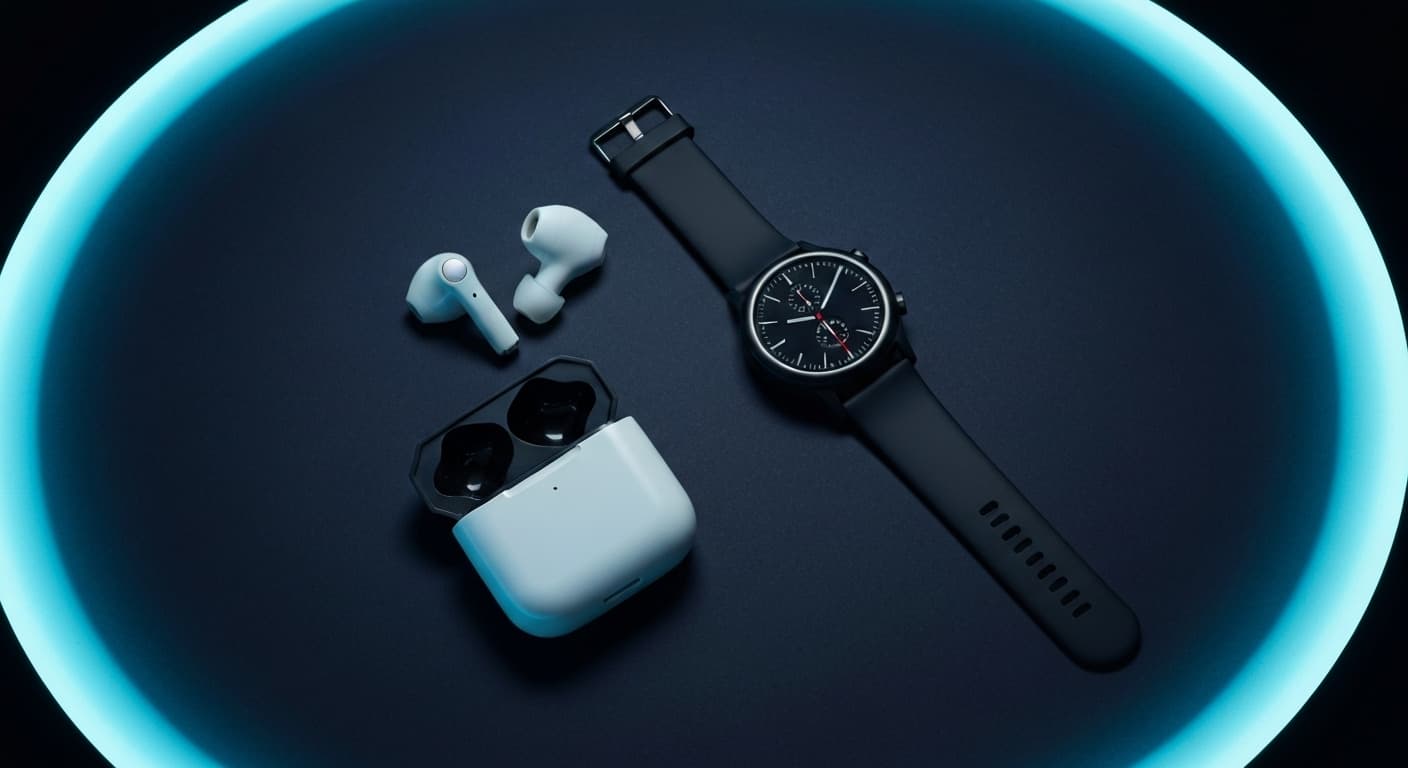
Electronics is one of the trickiest categories to photograph. Glossy screens pick up every reflection. Metal housings catch stray light. Small products like earbuds and cables are nearly impossible to scale in a white-background shot. The fix used to mean a light tent, a macro lens, and a half-day in a studio. AI does it in 60 seconds for under $1.
By LinkedIn: Brian Chen • 8 min read • Published June 28, 2026

Quick Answer
Electronics stores on Shopify convert at 1.2–3.6%. Stores with professional lifestyle photography consistently hit the top of that range; white-background-only listings cluster near the bottom. Traditional electronics photography costs $85–$250 per image (studio, lighting, post-production). AI generates up to 9 lifestyle images per product in 60 seconds for under $1. The main challenges for electronics — reflections, scale, precision detail — are ones AI handles particularly well with diffused studio lighting simulation and contextual scene generation.
Why Electronics Photography Is Harder Than Other Categories
Put a ceramic mug on a white background and it looks fine. Put a pair of wireless earbuds on a white background and they disappear into it. Scale is ambiguous, surface details vanish, and the glossy housings reflect everything in the room including the camera itself.
Electronics present a set of photographic challenges that most other categories don't share. Reflective metal and plastic surfaces require controlled, diffused lighting rigs. Small products like earbuds, cables, and phone cases need macro lenses and precise focus stacking to show detail clearly. Screens go either pure black (showing nothing) or pick up window glare and ceiling lights (showing everything except the product).
The result: a lot of Shopify electronics sellers default to supplier photos. Those photos were shot in a factory context for a product datasheet, not to sell to a consumer who wants to know whether these earbuds fit in a jacket pocket or how they look on a desk setup. Sales suffer.
AI generates the lifestyle context that supplier photos never provide. And it handles the hard parts of electronics photography with the same lighting physics that pro photographers solve with expensive equipment: soft diffusion that eliminates hotspots, natural shadow casting that adds depth, surface simulation that makes glossy products look clean instead of mirror-like.
| Challenge | Traditional Photography | AI Photography |
|---|---|---|
| Reflective surfaces | Light tent, diffusion panels, 2–3 hour setup per product | AI simulates diffused studio lighting; no hardware needed |
| Small product scale | Macro lens, focus stacking, scale reference props | AI generates contextual scenes that communicate scale naturally |
| Screen/display handling | Separate screen composite or polarizing filter | AI renders dark or content-showing screens from source image |
| Lifestyle context | Location, props, setup — or stock photo compositing | AI builds desk setups, travel scenes, everyday contexts in 60s |
| Color/finish variants | Full reshoot per colorway; multiply cost by variant count | Separate run per variant, same 60-second turnaround |
| Cost per SKU | $85–$250 per final image; $4,000–$12,500 per 10-SKU shoot | Under $1 for up to 9 images |
The 5 Image Types Every Electronics Listing Needs
Tech shoppers are detail-oriented. They read spec sheets and compare reviews. What they want from product images is confirmation: does this thing look as good in real life as it does in the render? Does it actually fit the use case I have in mind? Each image type answers a different version of those questions.
Clean background shot
Required for Google Shopping and Amazon compliance. A white or light-neutral background with the full product visible, no harsh shadows or reflections. For electronics, this means soft, even lighting across all surfaces. Think of it as the product passport photo — it confirms what the product looks like, not where it lives. Lead your gallery with this shot, but don't stop here.
Lifestyle context scene
A tech product without context leaves shoppers guessing. Wireless earbuds on a white background tell you what they look like. Wireless earbuds resting next to a phone on a clean desk, or sitting in a gym bag beside running shoes, tell you where they fit in your life. Electronics that appear in realistic, recognizable setups convert 25–35% better than isolated shots, because context closes the imagination gap faster than any product description (Rewarx, 2026).
Detail close-up
The precision of electronics is a selling point. The mesh grille on a speaker. The braided cable and USB-C connector on a charger. The mechanical switches on a keyboard. The antenna lines on a phone. These details communicate build quality faster than specs do. Shoppers who never read the bullet list will notice a tight close-up of a premium finish. AI generates macro-level detail shots from your product image, preserving texture and material quality cues.
Scale reference shot
Scale anxiety is real for electronics. Is this speaker actually small enough for a bookshelf? Will these earbuds fit in my coat pocket? A shot next to a recognizable object — a phone, a coffee mug, a hand — answers the question without making the shopper do mental math from dimensions. For small accessories, the scale reference shot often does more conversion work than the lifestyle scene.
Use-case environment shot
Desk setup for a keyboard or monitor. Travel pack for earbuds or a portable charger. Home studio for a microphone. Gym bag for wireless headphones. The use-case environment shot sells the vision: you, with this product, in the moment that matters. These images have the longest average page view time of any image type for electronics listings — shoppers linger because the scene matches what they want their life to look like with the product in it.
AI Photography by Electronics Product Type
Electronics is a broad category. A mechanical keyboard has completely different photography requirements than a pair of true wireless earbuds. Here is what works for the highest-volume subcategories on Shopify.
Wireless Earbuds & Headphones
Scale is the number-one issue. In isolation, most earbuds look identical to competitors. In context — resting on a phone, sitting in a case on a nightstand, hanging around a neck on a commute — they tell a story. AI generates these contextual scenes with your specific earbuds as the subject. Include a case-open shot showing the earbuds in their charging case: this answers the size question and the carrying question in a single image.
Keyboards, Mice & Desk Accessories
Desk setup photos are aspirational for this category. Shoppers buying mechanical keyboards or premium mice are building a workspace they feel good sitting at. An AI-generated minimal desk setup — the keyboard on a clean surface with a monitor in the background, soft morning light, a coffee mug — communicates the aesthetic before any feature description does. Include a keycap close-up for keyboards: the tactile detail is a major purchase factor.
Phone Cases & Mobile Accessories
Phone cases need two things that are hard to get from supplier photos: the case with a phone in it (not the flat case alone), and the case in a pocket or bag context to show how it fits real life. AI can composite your case onto a phone in realistic lifestyle scenes. For chargers and cables, a tidy cable management shot or a neat bedside table scene communicates that this is a premium product, not a cheap commodity cable.
Portable Speakers & Smart Home Devices
Environment placement drives purchase decisions for speakers and smart home products more than any other electronics subcategory. A speaker on a kitchen counter, a smart light bulb in a living room lamp, a voice assistant on a bookshelf — these images answer 'where does this go in my home?' before the shopper has to imagine it. AI generates these room-scene placements in seconds. Match the aesthetic to your target demographic: minimalist and Nordic for design-forward buyers, warm and cozy for family-oriented products.
Wearables: Smartwatches & Fitness Trackers
Wearables are lifestyle products as much as tech products. The wrist shot is essential — a clean on-wrist image showing the watch face and band in a light outdoor or active context. AI generates these on-wrist scenes with your device as the subject. Include a charging dock shot and a face close-up showing the display detail. For fitness trackers, an outdoor workout context (running path, gym backdrop) completes the brand story.
| Product Type | Must-Have Shot | Primary Buyer Question |
|---|---|---|
| Wireless Earbuds | Case-open shot + lifestyle context | How small are they? Will they stay in my ears? |
| Keyboards & Mice | Desk setup scene + keycap/button close-up | Does it look good on my desk? Is the quality real? |
| Phone Cases | Case on phone in lifestyle context | What does it look like with an actual phone in it? |
| Portable Speakers | Room environment placement shot | Where does this go in my home? Does it fit the vibe? |
| Smartwatches | On-wrist outdoor or active lifestyle shot | How does it look when I'm actually wearing it? |
Electronics Product Photography: Before & After
A mechanical keyboard on a white background shows you the product. A mechanical keyboard on a clean desk setup with soft morning light and a monitor in the background shows you the experience. That gap is where conversions live.
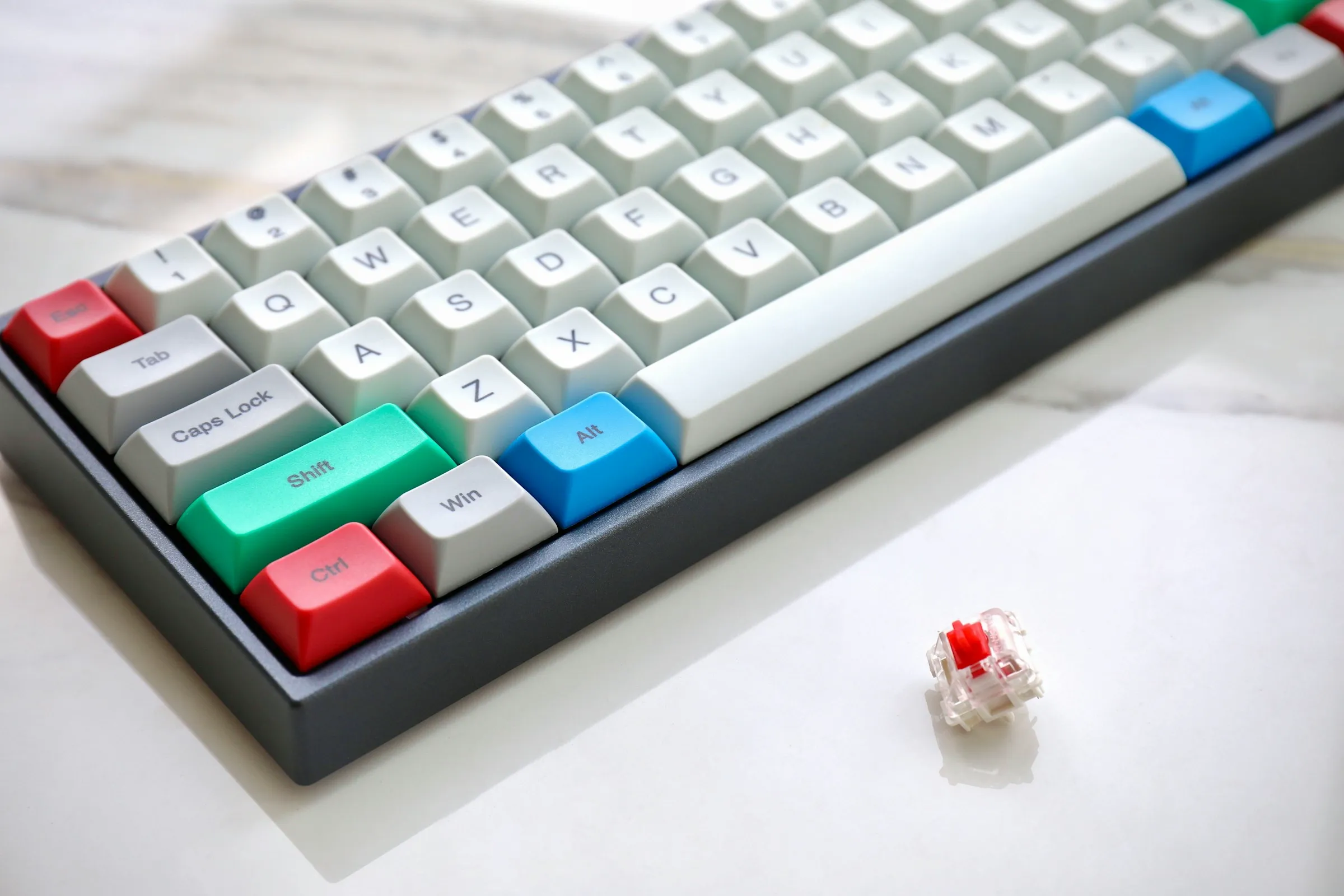
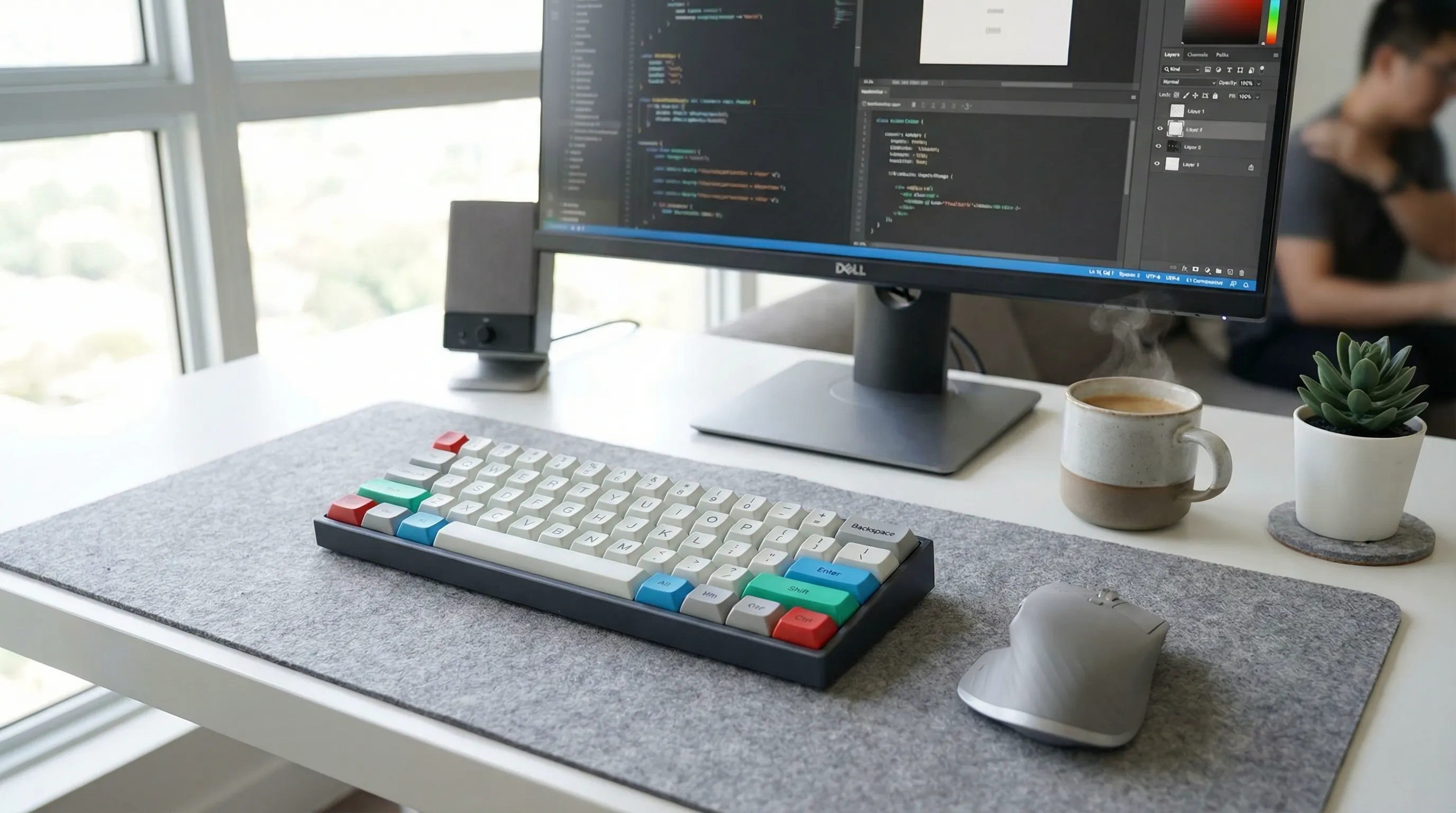
Generated with Prodofoto in under 60 seconds. No studio booking, no lighting rig, no photographer.
How to Photograph Your Electronics Products With Prodofoto
Prodofoto works inside Shopify. You select a product from your catalog, choose a photo mode, and get up to 9 lifestyle images in about 60 seconds. No prompt engineering. No tool switching. Publish directly back to your product listing when you find the shots you want.
Start with the best source image you have
Your source image doesn't need to be studio quality, but it should show the full product clearly. For electronics: a front-facing image with even lighting and no competing reflections. Keep screens off (dark) or showing the actual UI content you want featured. Remove clutter from the background — even a simple table surface works better than a busy shelf. The cleaner the source, the better the AI output.
Select the product in Prodofoto
Prodofoto pulls directly from your Shopify catalog. No uploading, no file management. Find the product you want to shoot, select it, and the app uses your existing product images as the source.
Choose your photo mode
For most electronics, Lifestyle mode places your product in a realistic environment — a desk, a travel bag, a nightstand — with natural-looking light and depth. Product-Only mode generates clean catalog shots on elegant surfaces if you need additional studio-style images. On-Model mode works for wearables like smartwatches, earbuds, and headphones where you want the product shown on a person.
Review your 4 generated images
Prodofoto generates 4 photos per run, each with variation in angle, scene composition, and lighting. Pick the shots that answer the buyer questions you identified: scale, lifestyle context, premium finish. If none hit perfectly, regenerate. You get a fresh set of 4 with every run, and you can run as many times as you need.
Publish directly to your Shopify listing
One click sends your selected photos to your product listing in Shopify. No downloading, no re-uploading, no file management. The images live in your Shopify media library and update on your product page immediately.
Prodofoto generates up to 9 photos per product in about 60 seconds for under $1. No studio. No photographer. No waiting.
The entire workflow stays inside Shopify. Compatible with all Shopify plans. Free plan available.
Install Prodofoto on ShopifyTo understand how the underlying AI technology produces realistic product images, read How AI Product Photography Actually Works.
For category guides on other product types, see AI Photography for Sports & Fitness and The Complete Guide to AI Product Photography.
Turn One Tech Product Shot Into a Full Gallery
Desk setup scenes, lifestyle context, detail close-ups, scale references, on-wrist shots. Prodofoto generates up to 9 images per product in 60 seconds for under $1. No light tent or studio required.
Frequently Asked Questions
Does AI product photography handle reflective electronics surfaces well?
Yes. Modern AI photography models understand surface physics and lighting interactions. They can simulate soft, diffused studio lighting that minimizes hotspots on glossy screens and metal housings — the same techniques a pro photographer uses with a light tent. The result: clean, professional shots without the glare artifacts you get when photographing electronics with consumer cameras.
Can AI product photography show product screens accurately for electronics?
AI handles unlit or off screens well, generating clean dark glass that shows the product shape without distracting reflections. For on-screen content, provide a source image that includes the screen content you want shown. AI preserves visible screen graphics when they appear in the source. If accurate UI display is critical, combine an AI-generated lifestyle scene with a post-processed screen composite.
How many photos does a tech product listing need on Shopify?
Plan for 6–8 images per SKU. A high-converting electronics listing typically includes: one clean white-background shot for Google Shopping compliance, a front and back profile in a lifestyle setting, a detail close-up of key ports or buttons, a scale reference shot (earbuds next to a hand, speaker next to a phone), a packaging shot, and one lifestyle environment scene (desk setup, gym bag, travel kit). That set closes the main buyer questions without requiring a product return.
What is the conversion rate for electronics stores on Shopify?
Electronics on Shopify converts at 1.2–3.6% depending on brand trust, price point, and image quality. Unknown brands selling items above $50 cluster near the low end; stores with strong lifestyle photography and detailed product galleries consistently hit 2.5–3.6%. The gap between bottom- and top-quartile electronics stores tracks closely with image quality.
How much does traditional product photography cost for electronics?
Professional electronics photography runs $85–$250 per final image when you factor in studio time, lighting setup, post-production, and retouching. A 10-SKU shoot with 5 images each costs $4,250–$12,500. AI generates up to 9 images per product in 60 seconds for under $1. A full 100-SKU tech catalog costs under $100 with AI versus $42,500–$125,000 traditionally.
Does AI product photography work for small consumer electronics like earbuds or phone cases?
Yes, and this is where AI often beats traditional photography. Small products are notoriously hard to photograph — they pick up every reflection, and getting consistent scale and proportion across a catalog requires precision studio setups. AI generates contextual lifestyle shots (earbuds next to a phone on a desk, a case on a coffee table) that communicate scale and use context without the setup overhead.
Can I use AI-generated product photos on Amazon and Google Shopping for electronics?
Yes. Both Amazon and Google Shopping allow AI-generated product images as of 2026. The only restrictions apply to the primary listing image on Amazon and Google Shopping, which requires a real product on a white or light background — AI can generate those too. Secondary lifestyle images and gallery photos have no AI restrictions. Accurate product representation is the only rule: the AI photo must show what the product actually looks like.
References
- 1. Skailama — Ecommerce Conversion Rate by Industry 2026 (electronics 1.2–3.6%)
- 2. GrabOn — 50+ eCommerce Product Photography Statistics 2026 (93% of purchase decisions visual)
- 3. Rewarx — Ecommerce Product Photography Conversion Rates 2026 (lifestyle context lifts conversion 25–35%)
- 4. Shopify — How to Shoot Reflective Products: DIY Lighting Setups
- 5. Digital Applied — AI Product Photography Tools 2026: Best for eCommerce ($85–$250 per image traditional cost)
- 6. Rewarx — AI Product Photography Trends 2026 (94% material physics accuracy)
- 7. Popupsmart — E-commerce Conversion Rate Statistics 2026